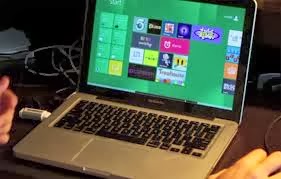
You 're fed up with constant crashes of Windows that require you to perform an improper shutdown of the system to start the reboot , which usually causes data loss? Not to mention the frustration and the constant disturbance Windows crash brings with him .
 If your PC crashes regularly , it means that something is wrong with your computer. It is probably not a problem of Windows 8, Windows 8 as permanent tracks on other computers.
Here are some tips that can help you prevent unexpected Windows 8 PC crashes :
Check hardware conflicts : Many blue screen errors are the result of conflicts and hardware installation. All components of your system consume IRQ ( interrupt request channel ) when installed , and each device requires its own channel to function properly. When two devices share the same channel and are used simultaneously, a deadlock may occur .
Go to your Device Manager, and look for devices marked with a yellow exclamation point. It is those who have problems, and can usually be fixed with a driver update . Just look for the manufacturer of your device website for the latest driver software , or , strictly speaking , reinstall the offending material itself.
Is your PC a Bad RAM? Poor memory is many times the reason for blue screens and system boots failed. Fortunately, however, your RAM modules are some of the easiest to check and replace elements.
First, use the utility Memtest86 + to make sure if your RAM is really the problem . If errors occur , you have next to determine exactly which memory stick is to blame. To do this, remove all the sticks of your saving an inserted into the slot main memory system. If the system boots fine and no error is detected in Memtest86 + , continue testing in the same way and stick to both inserted into the primary slot until the system does not start or Memtest86 + indicates problems .
Finally, you nailed exactly what memory module is causing the trouble, and then you can replace it with a fresh and clean stick (just make it fully compatible with your motherboard and other sticks of RAM) .
Avoid heating system : computers generally become warm if used for long hours . We know from the noisy fans bolted inside our computers , and burning alarming that we feel our legs after using a laptop for too long. Everything inside a PC generate heat , and heat can cause components to become unstable and crash your PC. In fact , computers are designed to grow as a last-ditch effort to protect their own internal components against damage from permanent heat.
If you suspect that your PC is not effectively disperse heat properly, first make sure all your fans are running properly. If you do not move or rotate seems unusually slow , check its connections to make sure it is properly fed . If everything seems fine, but the fan still does not work, it is best to replace it. Next, make sure all vents, grilles and filters your PC are unimpeded by dust, animal dander , and other raw materials that prevent adequate ventilation.
Run the Disk Defragmenter : Your hard drive may become a little more fragmented and unstable, every time you save a file , install a program , or remove something. Not only does it slow down the hard disk, but it can also cause problems for your OS trying to find the necessary files to run. Thus , your system will eventually give up and eventually crashes. Defragment your PC is as easy as pressing a button. Run the Disk Defragmenter in your system tools each week to keep your recovered files.
Check for viruses : Malware and viruses are important causes of blue screens . Fortunately, the solution is simple. Start your antivirus program confidence , make sure it is updated and give your system the most robust available analysis.
Starting in Safe Mode ( press F8 when the computer is ) is an easy way to get behind a "return to destroy the virus.
If the virus has disabled your ability to start your antivirus software, try to restart the PC in safe mode by pressing ' F8' before the Windows logo appears. Safe Mode disables all foreign drivers and launch programs , and only allows the base operating system to load . Once in Safe Mode , " you should be able to run your antivirus program, and complete a full scan from there .
If you take care of the things mentioned above, then you can effectively avoid accidents Windows 8, blue screens, no boots or frozen system. All you need is to be little warning and protection to your Windows 8 to make it work smoothly.
Here are some tips that can help you prevent unexpected Windows 8 PC crashes :
Check hardware conflicts : Many blue screen errors are the result of conflicts and hardware installation. All components of your system consume IRQ ( interrupt request channel ) when installed , and each device requires its own channel to function properly. When two devices share the same channel and are used simultaneously, a deadlock may occur .
Go to your Device Manager, and look for devices marked with a yellow exclamation point. It is those who have problems, and can usually be fixed with a driver update . Just look for the manufacturer of your device website for the latest driver software , or , strictly speaking , reinstall the offending material itself.
Is your PC a Bad RAM? Poor memory is many times the reason for blue screens and system boots failed. Fortunately, however, your RAM modules are some of the easiest to check and replace elements.
First, use the utility Memtest86 + to make sure if your RAM is really the problem . If errors occur , you have next to determine exactly which memory stick is to blame. To do this, remove all the sticks of your saving an inserted into the slot main memory system. If the system boots fine and no error is detected in Memtest86 + , continue testing in the same way and stick to both inserted into the primary slot until the system does not start or Memtest86 + indicates problems .
Finally, you nailed exactly what memory module is causing the trouble, and then you can replace it with a fresh and clean stick (just make it fully compatible with your motherboard and other sticks of RAM) .
Avoid heating system : computers generally become warm if used for long hours . We know from the noisy fans bolted inside our computers , and burning alarming that we feel our legs after using a laptop for too long. Everything inside a PC generate heat , and heat can cause components to become unstable and crash your PC. In fact , computers are designed to grow as a last-ditch effort to protect their own internal components against damage from permanent heat.
If you suspect that your PC is not effectively disperse heat properly, first make sure all your fans are running properly. If you do not move or rotate seems unusually slow , check its connections to make sure it is properly fed . If everything seems fine, but the fan still does not work, it is best to replace it. Next, make sure all vents, grilles and filters your PC are unimpeded by dust, animal dander , and other raw materials that prevent adequate ventilation.
Run the Disk Defragmenter : Your hard drive may become a little more fragmented and unstable, every time you save a file , install a program , or remove something. Not only does it slow down the hard disk, but it can also cause problems for your OS trying to find the necessary files to run. Thus , your system will eventually give up and eventually crashes. Defragment your PC is as easy as pressing a button. Run the Disk Defragmenter in your system tools each week to keep your recovered files.
Check for viruses : Malware and viruses are important causes of blue screens . Fortunately, the solution is simple. Start your antivirus program confidence , make sure it is updated and give your system the most robust available analysis.
Starting in Safe Mode ( press F8 when the computer is ) is an easy way to get behind a "return to destroy the virus.
If the virus has disabled your ability to start your antivirus software, try to restart the PC in safe mode by pressing ' F8' before the Windows logo appears. Safe Mode disables all foreign drivers and launch programs , and only allows the base operating system to load . Once in Safe Mode , " you should be able to run your antivirus program, and complete a full scan from there .
If you take care of the things mentioned above, then you can effectively avoid accidents Windows 8, blue screens, no boots or frozen system. All you need is to be little warning and protection to your Windows 8 to make it work smoothly.